You wait for ages…

What’s this? No posts for 4 years, then 2 in one day? A bit like buses 2 come along at once.

Which is the reason for this post. Besides the interest in railways, I also have a passion for old buses, particularly those of the former Ribble Motor Services of my home town of Preston. (Long since subsumed into the horror that is Stagecoach Buses – highway robbers if there ever were).

Both of my parents worked for Ribble from around 1947 to 1979 in my dad’s case, although mum left when I was born, some years before that. I have a soft spot for the original Ribble company and I am just about old enough to remember the old red & ivory livery, before the National Bus Company Poppy Red came in around 1969/70.

I am not the only one who holds fond memories of Ribble Motors and some enthusiasts have saved some of their historic vehicles to be enjoyed by current and future generations. Every so often there is a running day, sometimes in conjunction with the British Commercial Vehicle Museum in Leyland.

Based in part of the old Leyland Vehicles works, that was the origin of many of Ribble’s buses, who were loyal customers of Leyland for many years.

One such event took place in Leyland over the August Bank holiday, and while I have published the pictures over on RMWeb, I haven’t shown any of them on here.

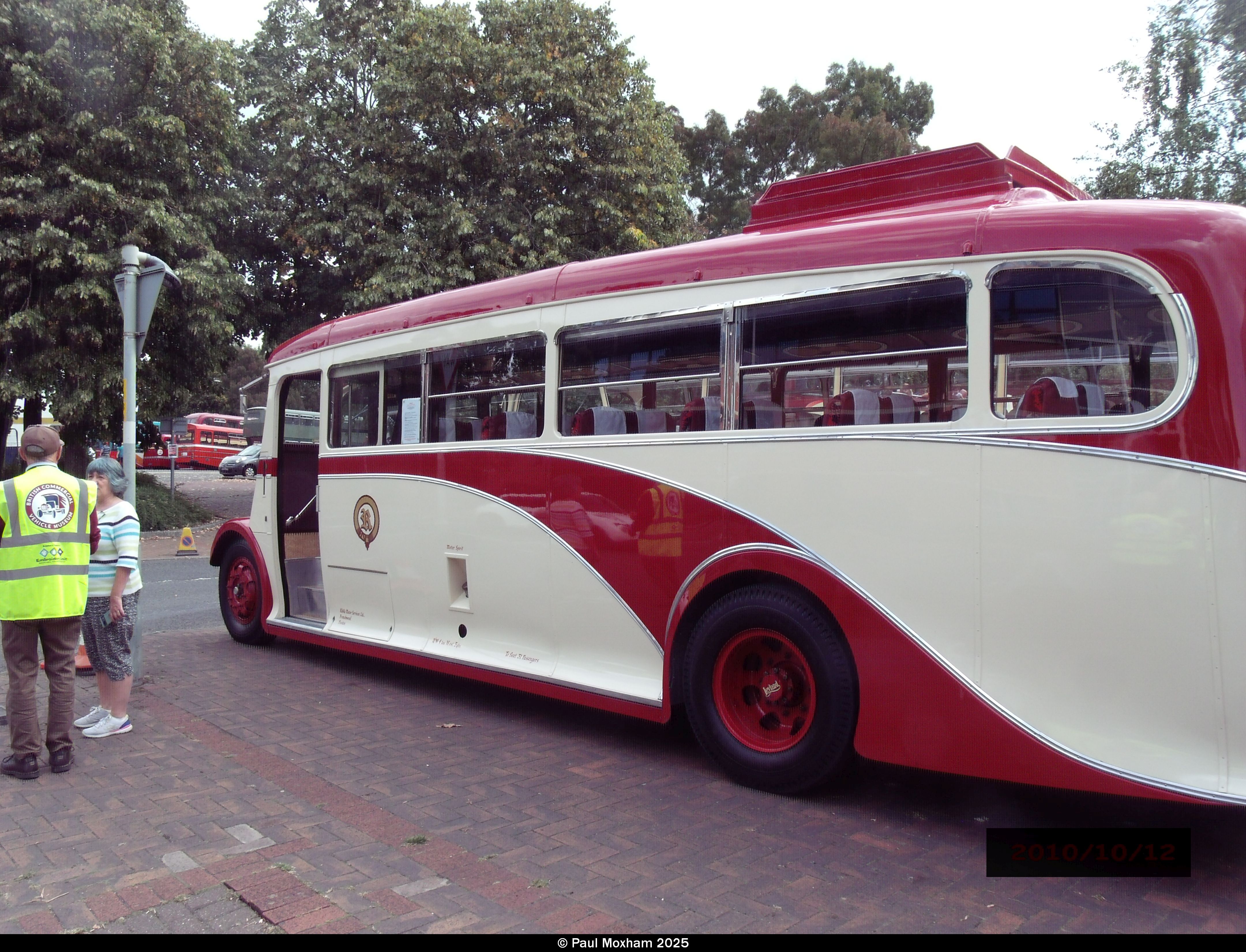
This is outside the BCVM in Leyland, it’s Ribble 1568, a 1936 Leyland Cheetah with Brush bodywork. Almost 90 years old, it shows the beautiful lines of a classic bus of that era.

More pictures and words over on RMWeb https://www.rmweb.co.uk/forums/topic/122692-for-those-interested-in-old-buses-and-coaches/?do=findComment&comment=5927794

Kidderminster Redux

The last post on here was almost 4 years ago and related to a trip to the Severn Valley Railway headquarters for the 5.5MM Association AGM.

While I haven’t been to every one since 2021 (it has clashed with other exhibitions in some years), I did make it this year, and have come away with a renewed sense of purpose to create and document more of my work in this scale.

Unlike in previous years, I chose to drive to Kidderminster this year. Since the West Coast route franchise moved from Virgin Trains to Avanti West Coast, the service has deteriorated to the point where it can no longer be relied upon, not to mention it is now almost impossible to book advanced tickets until about a week before your intended travel date. And in addition it is actually cheaper in terms of fuel used to drive than to travel by train, much though I would prefer to do so.

Unless government gets a proper grip on the privatised train operating companies (unlikely under the present government), I’m afraid it looks like most of my long distance travel will be by car in future.

Avanti West Coast is now known as Avanti Worst Case Scenario in this house at least.

The Butterfly Effect

IN chaos theory, the butterfly effect proposes that a butterfly flapping its wings in the Amazon can cause storms in Texas, in other words, something seemingly insignificant can have a knock on effect apparently unrelated to it.

I made a trip to Kidderminster on Saturday to the AGM of the 5.5mm Association, a very pleasant day out with like minded friends. The train journey there was uneventful, but the journey back home after the meeting became an increasingly bizarre series of events.

The journey from Kidderminster to Wigan involved two changes, at Smethwick Galton Bridge, and at Wolverhampton. It was supposed to be West Midlands Railway for the first two trips as far as Wolverhampton, then Avanti West Coast from there to Wigan.

As I am sure you have realised by now, it didn’t work out like that.

I missed the train I was supposed to catch from Kidderminster, and ended up on one 15 minutes later. This meant I missed the connection at Smethwick Galton Bridge by about 3 minutes. Rather than wait for the West Midlands Railway service an hour later, I caught a Transport for Wales train to Wolverhampton.

The Avanti West Coast train from Wolverhampton to Glasgow (via Wigan) was delayed, so I decided to catch the next Cross Country train to Manchester Piccadilly, then a Northern train back to Wigan. I used to commute regularly into Manchester Piccadilly, so I know the route well.

Upon arrival at Manchester Piccadilly, I discovered there were no direct trains to Wigan for at least an hour, so knowing there were connections at Salford Crescent for Wigan, I caught the next train there.

Salford Crescent to Wigan services are provided by Southport trains (via Bolton) and Kirkby trains (via Atherton). The first train due was a Southport service. This is where things started to get even more bizarre. There was a power cut at Bolton station, so while the trains could run through, it obviously wasn’t safe to let passengers out at a station in total darkness. In fairness to Northern, they had laid on replacement buses from Salford Crescent to Bolton.

I was looking out of the window as we passed through Bolton, and I can confirm the station was invisible from the train.

Arriving at Wigan I made my way to bus station for the bus home. The local council had decided in its infinite wisdom, to start roadworks on the Ring Road, which is a dual carriageway. Despite its name, it actually runs through the centre of the town. This has caused some bus services to be diverted in the town centre. Add in a replacement bus driver unfamiliar with the roadworks and it was recipe for a very strange journey home.

Leaving the bus station by the diverted route, he reached the junction with the Ring Road where he should have gone straight across to pick up the bus’ normal route. Instead he turned right, intending I think to take next left off the Ring Road, which is the way he would have gone if we had been on the normal route. Needless to say, he couldn’t turn left because of the roadworks and after much cursing he did a U turn at the next lights on the dual carriageway before joining the one way system and crossing the Ring Road where he should have done if he had been on the normal route.

From being 15 minutes late out of Kidderminster, I finally got home 2 hours after I should have done, hence the link to chaos theory!
2021 : Where has the time gone?

Despite my good intentions, the updates on this blog seem to be getting further apart. I have to admit, I mostly use this blog to host photos to show my work on other fora.

What of this update? Well, the work situation has resolved itself, the furlough lasted 4 months, followed by the first week back being spent on the phone to the IT Dept. It appears leaving my work’s laptop switched off for 4 months meant it had missed some critical updates, and therefore wouldn’t work when I switched it back on. Who would have thought that, eh?

Just to show I haven’t been completely idle, and if I can remember how to do it, there should be some pictures below.

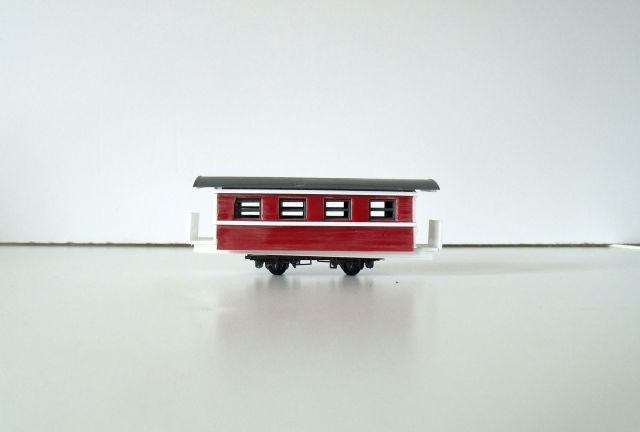
Coach part completed
GEDSC DIGITAL CAMERA

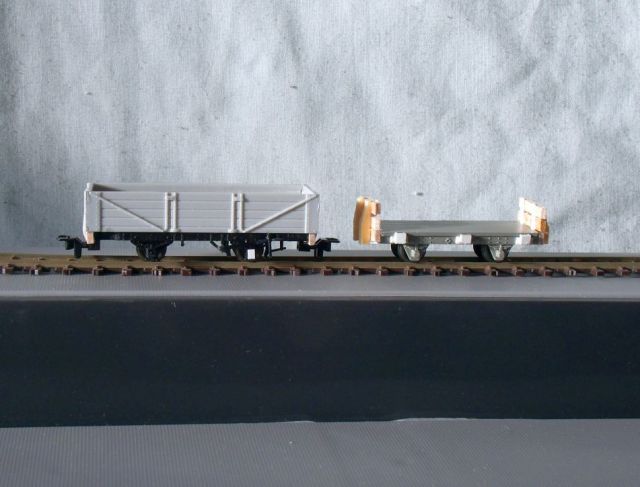
Part finished 4 wheel coach (Cut down Lima/Peco chassis) & 2 wagons (Cut down Dapol/Dundas chassis & Ninelines chassis converted to a stake wagon)

GEDSC DIGITAL CAMERA

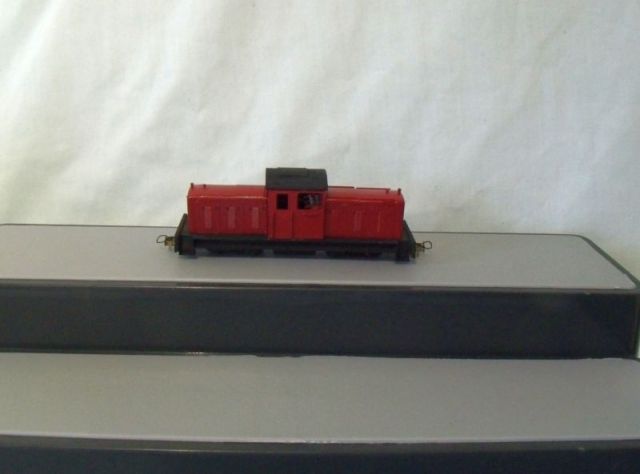
Recent photo of a very old model from about 30 years ago. 2 Airfix Drewry kits on a Lifelike N gauge diesel chassis.

GEDSC DIGITAL CAMERA

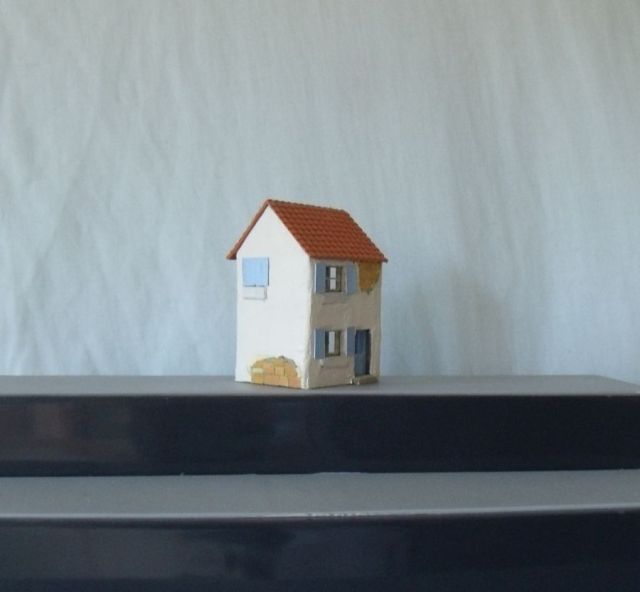
Finally for now, my first completed building for a number of years, a run down French cottage for an upcoming H0e layout.

I have a week off coming soon, and a couple of model railway shows coming up, the first since the pandemic started, so I am trying to get a couple of things ready for those shows.

Watch this space, (but no promises.)

2020 : Ctl, Alt, Delete

Wow. Just wow. If I had been told when I started this blog that by early 2020 the world would be turned upside down, I wouldn’t have believed it.

Modelling had taken a back seat since moving house last year, due to pressure of work. That began to change in March this year, as the Coronvirus started to bite. My employers initially sent me home on full pay, then decided they wanted me to work from home. That was fine, since my job involves issuing written responses to customer complaints, and while I miss the craic of working with my friends, I did cut my commute from 2 1/2 hours a day to 30 seconds. In theory that gave me an extra 2 1/2 hours modelling time.

After only 2 weeks of working from home, they decided to furlough me. I wasn’t very pleased about that, particularly since that came with a 20% pay cut, but after my initial annoyance, I have realised there is little I can do about it, so I have accepted it and decided to use the time to catch up with some projects (including some more regular updates of this blog!). Hence the title of this post, it’s a sort of life reset.

The tale of the unexpected shed

What was I saying last time about life getting in the way of modelling?

Since the last post on here (February 2019), various things have happened which have resulted in me having to move from the 2 bedroom shoebox in Atherton where I was living at the time, to a much larger 3 bedroom bungalow in Hindley Green.

Estate agents (and letting agents in the case of this rented property) are well known for being, how can I put it, ‘economical’ with the truth when it comes to describing their properties. Whilst the description of the bungalow, garage and driveway were accurate, they completely failed to mention a 12′ x 8′ shed in the back garden!

As all railway modellers know, a shed is a Good Thing, so it makes the omission of it from the agent’s advertising material all the more strange. I only discovered it when I came round to view the property in May. Although the shed is very welcome, it was unexpected, hence the title of this post.

Inspirations

This post is a bit later than originally intended. Apparently it was my WordPress 1 month birthday recently. I’m not going to throw a party…

I don’t know about you, but I find life tends to get in the way of modelling, you know, all the boring stuff – like work, sleeping, eating, travelling to work and so on. I find that sometimes I need inspiration, or possibly a distraction of some sort, to send me back to the modelling table.

Just such inspiration struck yesterday. I am a regular visitor to a meeting, held roughly once every 6 weeks, by a local 009 Group. Despite the name, it is not exclusively 4mm scale on 9mm track, it is more a loose association of like minded modellers and railway enthusiasts, not all of whom actually model 009. One of the displays there yesterday by was by a friend of mine from the 5.5mm Association showing a modular layout concept he and a couple of others are developing.

I have always shied away from modular layouts in the past, the results are often toylike and sudden changes in scenery from western desert to florida swampland in a matter of inches, always jars for me. However, this new concept uses readily available baseboard kits, standard 6 inch ‘connecting links’ which are painted black, standard electrical connectors and Peco track (alright it’s 0-16.5 track, but who’s counting?) and apart from the obvious requirement that the track has to be a certain distance from the front of the board, everything else is pretty much up to the builder.

Since my interest in narrow gauge tends towards the larger 3′ gauge prototypes (Ireland, Isle of Man etc), the chance of me ever having enough space to model proper length trains in my own house are remote, but by contibuting a couple of 900mm long modules, my longer trains can run whenever the modular layout is set up at an exhibition.

All the above was the inspiration for me to dig out my 5.5mm scale models and start working on a few wagons for the next meeting, which will be at Narrow Gauge North in Leeds on 9th March.

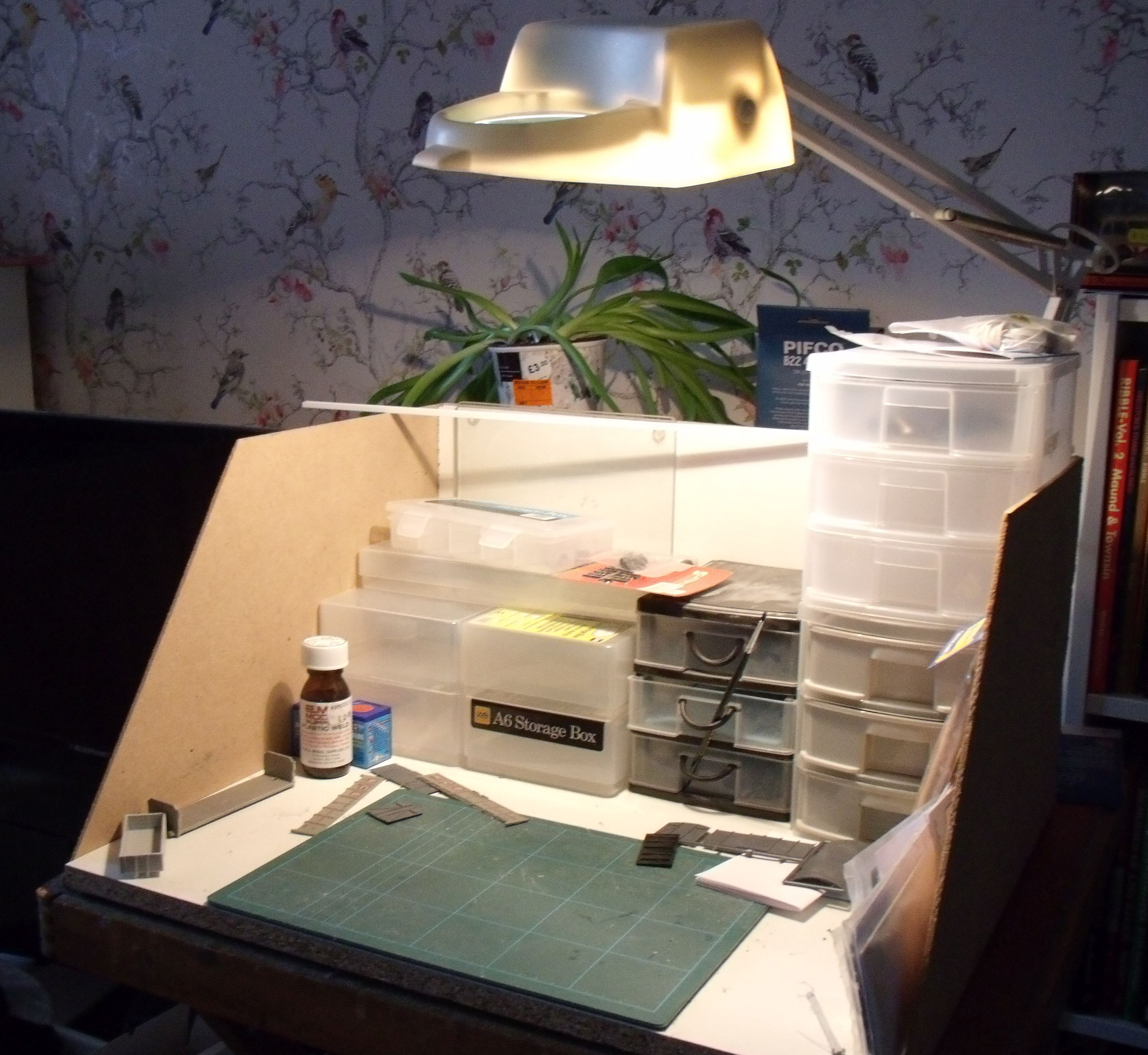
Just to prove it exists, here’s a picture of my workbench.

GEDSC DIGITAL CAMERA

Railway modelling – scaling it down, and then scaling it down a bit more

Modern models in ’00’ are by and large true to scale, and any compromises are the necessary ones to keep them on the (underscale) track, and to accomodate the electric motors, but it was not always the case.

In this post I shall discuss some of these models which have been available in the past, and how they can be converted to something closer to scale (or even to a different scale.)

Let’s start with Hornby. I’m not going to go into their history here, which is long and involved. There has been much written elsewhere about the takeovers, mergers, bankruptcies and all the other corporate machinations that have lead to the current Hornby Hobbies plc. I am concerned here more with their various models produced over the years.

Triang Hornby (as they were then) produced a model of the LMS Stanier 20 Ton Brakevan in the early 1970’s under their reference R718. In isolation it appeared fine, it captured the look of the prototype, and we modellers accepted it. However, it wasn’t until the advent of the Airfix GMR version in the late 1970’s which showed the Hornby one to be at least a scale 4 feet too short. Oddly enough, the length of it is almost spot on for an ‘H0’ scale Stanier 20 Ton Brakevan, into which I intend to turn it at some point. (The Airfix one is now part of the Hornby range as R6801.)

Another model which was shrunk twice is the Hornby Dublo 20 Ton Grain Wagon. Right height, right width, but again a scale 4 feet too short. Once more, this has been shown up by a better ’00’ model, this time from Bachmann. Again the Hornby Dublo model can be turned into a passable ‘H0’ version by removing 4mm from the height & lowering the ends, one of these is on my list of projects for a future Scottish ‘H0’ branch line layout (not yet built). Despite originating with HD, this model is no longer with the modern Hornby company, the moulds went to G & R Wrenn, then to Dapol who are currently producing it. Confusing, isn’t it?

Coaches are another thing which manufacturers in the 1960’s & 1970’s tended to make shorter than scale, whereas they were usually to the correct 1/76 or 1/87 scale height & width, length tended to be 1/100 scale in order to fit round train set curves.

For the next entry I will be turning to some narrow gauge modelling, and if I can work out how to do it, some photos too! Until next time.

Scale and gauge, and the art of compromise

Having set out my love of the quirky side of railways, perhaps I should explain something about my approach to scale and gauge, and to the differences I apply to what may be considered the ‘mainstream’ modelling scales.

Scale, in its strictest definition, is the ratio between the full size and the model, e.g. 1/100, 1/76, 1/87 and so on.

Gauge is the distance between the rails, which obviously has to be identical over the whole railway, otherwise the trains would fall off. British standard gauge is 4′ 8 1/2 “.

Narrow gauge is basically anything less than 4′ 8 1/2″, which can be from 18 inches up to about 4 feet.

If you apply the scale to the prototype gauge, you would expect the model to be an exact reduction, wouldn’t you? Yes, well, this is where it starts to get complicated. While you can scale down length, width & height, some things when scaled down are simply too fine to work in model railways, like wheel flanges and valve gear for instance.

Add in manufacturing tolerances applicable at the birth of small scale models in the 1920’s, and certain compromises had to be made in order for the model trains to function, some of which we are still living with today.

There have been enough electrons disturbed on how and why we have ended up with the current mish mash of British scales and gauges, and I don’t intend to repeat them here. If you are interested, look up Henry Greenly and A R Walkley, and their involvement in the early development of this hobby.

In the next post I shall discuss some examples of the compromises used by manufacturers, and how we can turn those to our advantage.

The Journey Begins

Thanks for joining me!

Welcome to this, my new blog

I have for many years now (nearly 50 years!) built model railways, mostly but not exclusively UK outline. During that time I have been drawn to model those railways which could be said to be on the fringes of the railway world.

Narrow gauge lines struggling to survive; light railway lines half buried in grass, running occasional trains through remote locations; industrial railways serving vital industries, but now mostly gone and returned to nature; American short lines eking out an existence on the remnants of a once proud but now fallen flag. In short, the quirky, the unusual, lines with character.

Not for me the big shiny express locomotive with 12 coach train, I have nowhere to run such huge trains, plus to me they look faintly ridiculous charging around trainset curves. Not to mention that such trains usually comprise models straight out of the box, without any attempt to weather, or to personalise them in any way. Whilst they may give their owners pleasure (& to each his own) I’m afraid such models just leave me cold.


post